| |
Children and animal safety.
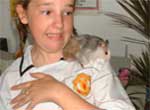
Young children and handling of small pets |
Parents sometimes ask or maybe wonder if they should get their child a small pocket pet. What are pocket pets? Small pocket pets are small animals, often rodents that are able to fit into the pocket such as a hamster, mouse, rat or gerbil.
Many children love animals and most enjoy having one of their own as a pet. Kids and pets go together like strawberries and cream. And by having a pet in the family children can also learn how to care for others by taking on the responsibility of pet care.
There are so many beneficial reasons why a child should grow up with a pet in the home. As having a pet can teach children so much. A family pet can also help children to socialize as they will have many stories to tell, engaging them in conversations with other children and adults. Pets can also be a relaxing influence on both parents and children, as everyone usually gets involved in the care of the animal as it becomes an integral part of family life.
However, there are some elements of health risks involved when children and animals are together. Here are some safety issues to consider before introducing any animal to a young child, most importantly for the safety of your child, and also for the animal’s safety and well being.
The Syrian hamster makes an ideal first introductory pet for young children. Small pocket pets such as a hamster are usually one of the first small pets to be considered. They are ideal as they take less time and effort than a dog or a cat, being less expensive to keep than the larger animals.
Caring for a pet can teach children to learn important lessons about the responsibility of caring for animals. Therefore children need to be taught how to be kind to animals, and it is important that children need to know how to play safely with animals. Children and animals can have a magical combination, but also a dangerous one. Here are some simple pointers to make sure your child’s relationship with their pet is always a safe one, a happy one, and one that stays that way.
Why children are more likely to be affected by E. coli and other bacteria than adults are?
Simply because a child's immune system is still in the developmental stage and not as resistant to bacteria as an adults immune system is. This can leave them susceptible to a whole range of infections from the common cold, to ear infections and gastrointestinal infection. A child's immune system is not fully protective until they reach around 12 to 14 years of age and is unable to mount an effective immune response against disease causing organisms such as bacteria and viruses.
It is not recommended that children under 7 years of age should be given any animal as a pet. Small children under 7 years of age are more likely than older children to pick up germs, bacteria, and disease from animals. Younger children have a habit of putting their hands in their mouths after stroking or handling an animal, and after touching the surfaces and equipment of animals, such as cages food bowls and bedding that animal’s use. The animal’s coats are contaminated with bacteria from their feces and urine. Very young children should not be allowed to stroke the coat of any animal. Even the cleanest of animals carry bacteria on their coats. Children under this age are more likely to pick up infections far easier than older children or adults.
Young children above this age should not have unsupervised access to animals and should always be supervised by an adult.
Young children are less likely than adults to wash their hands well, so it is very important to teach children to wash hands thoroughly with soap and water after any contact with animals or their bedding and equipment. Don’t let children kiss pets or to put their hands into their own mouths after touching an animal.
Noisy children can be irritants even to the calmest of pets; sudden and excessive noise can frighten an animal and cause it to bite. For this reason never leave small children alone with any animal, explain to your child that an animal’s hearing is much more sensitive than humans, and high pitched screams or sudden loud noises can easily startle an animal. Explain that animals have feelings and personalities just like people do. Some animals are naturally friendly and calm but can become nervous, skittish, and over excited in an excessively noisy environment. Animals may bite if given the opportunity or provoked.
Teach children never to interrupt an animal when it’s sleeping or eating.
- Never pull tails, ears, or play rough.
- Never to restrain or trap an animal or try to keep it from escaping.
- Never make loud noises around a pet, loud or sudden noise can startle pets and they may un-intentionally bite.
Discourage children from putting their hands into their own mouths or near their eyes when handling or playing with animals.
Children with pet allergies or with a low immunity should refrain from handling or being in close proximity of animals. Pet allergies adults and children.
Always wash hands well both before and after handling or touching animals, their bedding, equipment, food, or pet treats to prevent cross contamination of germs or viruses. Although the chances are minimal avoid taking the risk of infecting yourself with these germs by touching your eyes, nose or mouth. It's impossible to keep your hands germ-free, but washing your hands frequently can help limit the transfer of bacteria, viruses and other microbes.
All animals and humans carry a variety of micro organisms on their body and in their intestinal tract. These organisms can be transferred between people and animals, this is known as Zoonoses. On most occasions humans acquire these infections by transferring micro organisms from their hands to their mouths.
Hand to mouth transfer is the method by which organisms such as Escherichia coli and Salmonella cause infection in people. This and a few related strains of E coli can produce powerful toxins that can potentially cause severe disease. And small number of these bacteria can infect people, particularly children and the elderly. E coli, Campylobacter and Salmonella can be found in a variety of animal species, particularly Birds, Reptiles and Rodents.
Almost every type of animal has a number of diseases that it carries that are able infect humans. Symptoms of a salmonella or campylobacter infection are very similar and both may include diarrhea, fever, and abdominal cramps from 12 to 72 hours after exposure. In severe cases the infected individual may be hospitalized for dehydration. Furthermore, if the infection spreads from the intestines into the blood stream and is not treated salmonella can cause death.
In addition to lacking the proper hygiene practices of adults, kids are also more likely to get scratched or bitten by exotic pets through improper handling. This is primarily due to the fact that children often do not know how to properly handle exotic pets. And by not using the proper handling techniques for these animals can cause the animal to stress making them more inclined to bite or scratch. These wounds create a point of entry for bacteria that are transferable between humans and animals. The most common bacteria carried by animals are Salmonella, Rabies, Campylobacter, E.coli, Ringworm, and many more. Infections may be direct contact from a bite, a scratch or by ingestion from hand to mouth by an infected animal, or by touching an animal infected with ringworm. It can also be indirect where the person contacts infected body fluids such as urine or saliva, or inhaling infectious organisms.
Some other points to consider
Children should not be allowed to handle stressed or sick animals.
Animals should not be allowed near infants and toddlers.
Animals should not be accessible to children with pet allergies.
Adults should immediately stop any interaction by children with animals showing stress or harmful behavior.
Animals with a history of biting or other aggressive behavior must not be allowed to be handled by children.
Everyone, including adults, must wash their hands immediately after handling animals.
Whenever an animal is being handled try to cause as little fear or distress as possible, as a frightened or distressed animal may try to escape and may injure itself or your child.
Remember that even small animals bite and scratch and may well do so if they are not handled correctly.
If young children should be handling the animals take extra care choosing the type or breed.
Always teach proper handling techniques to children.
Zoonoses
Some parents may think that getting a pocket pet, a reptile, or another exotic animal may be the right choice for their child. Unfortunately if you have small children exotic pets such as reptiles or birds can be a danger to your family’s health if strict hygiene precautions are not observed and adhered to.
What is Zoonosis; A Zoonoses is any infectious disease that is able to be transmitted from animals, both wild or domesticated, from animals to humans or from humans to animals. The latter is called reverse Zoonosis. The word is derived from the Greek words zòon (animal) and nosos (ill). Some of these diseases are extremely serious and can be potentially life-threatening; others may cause only transient mild disease. Whilst reported instances of transmission of disease between domesticated animals and humans are thankfully not frequent, but nevertheless represent significant disease prevalence.
Children and people with poor immune systems are more susceptible to develop serious infections when they come into contact with zoonoses. Sarcoptes Scabiei mange mite is a parasitic disease and is transmissible to humans. The term refers to a mite infestation by either Sarcoptes Scabiei or other mite species closely related to sarcoptes scabiei. Campylobacter and Salmonella are bacterial infections that can be transmitted to humans.
Ring Worm is a highly contagious fungal disease. At a time when an animal appears to be ill there is no sure way of knowing whether or not it has a Zoonosis. Some animals can carry bacteria like Campylobacter (particularly more so with birds) and Salmonella (reptiles) and do not show any outward signs of illness.
Proper hygienic precautions should be taken after contact with any animal that could be carrying disease, particularly with children. And people known to have a poor immune function, or those being treated with immune suppressants, no young child should be exposed to any suspected sick or infected animal. Basic hygiene precautions should always be observed by the washing of hands after holding or stroking pets and after cleaning out their bedding or handling food and water bowls and other utensils that animals use.
| Children Handling Pets. Play Safe. Be safe. Responsible pet care |
Animals Young Children Safety |
|
|


